By Colleen Godfrey
Work Wearing You Down? You’re Not Alone.
Burnout recovery begins when we understand that exhaustion is not a personal failure, but a nervous system response to prolonged stress.
It shows up differently for everyone, but there are a few signs that tend to signal something deeper than everyday fatigue:
-
Emotional and physical exhaustion — feeling depleted before the day even begins
-
Reduced motivation — losing interest in things that once felt meaningful
-
Brain fog — difficulty focusing, planning, or making decisions
-
Detachment — feeling disconnected from work, relationships, or even yourself
These aren’t personal failures. They’re signals from a system that’s been asked to adapt beyond its sustainable limits.
Caught in the Hampster Wheel
Modern life asks the nervous system to stay “on” almost constantly. Rapid communication, blurred work–life boundaries, and the pressure to keep up can create a background hum of stress that never fully resolves.
Even work we care deeply about can become draining when there’s no rhythm of contraction and release—no space for rest and integration.
While flexible schedules, wellness perks, or time off can help with short-term relief, they often don’t address the deeper pattern: chronic stress reshapes how the brain and body perceive safety, effort, and control.
Over time, the system adapts by staying braced—or by flattening out altogether.
From the outside, it can look like you’re doing fine. From the inside, it feels like running on fumes while pretending the tank is full.
A Nervous-System View of Burnout
From a somatic and nervous-system perspective, burnout is a protective response, not a weakness.
When overwhelm becomes constant, the body may shift into survival strategies—hypervigilance, shutdown, numbing, or withdrawal. What looks like disengagement or lack of motivation is often the system conserving energy after prolonged demand.
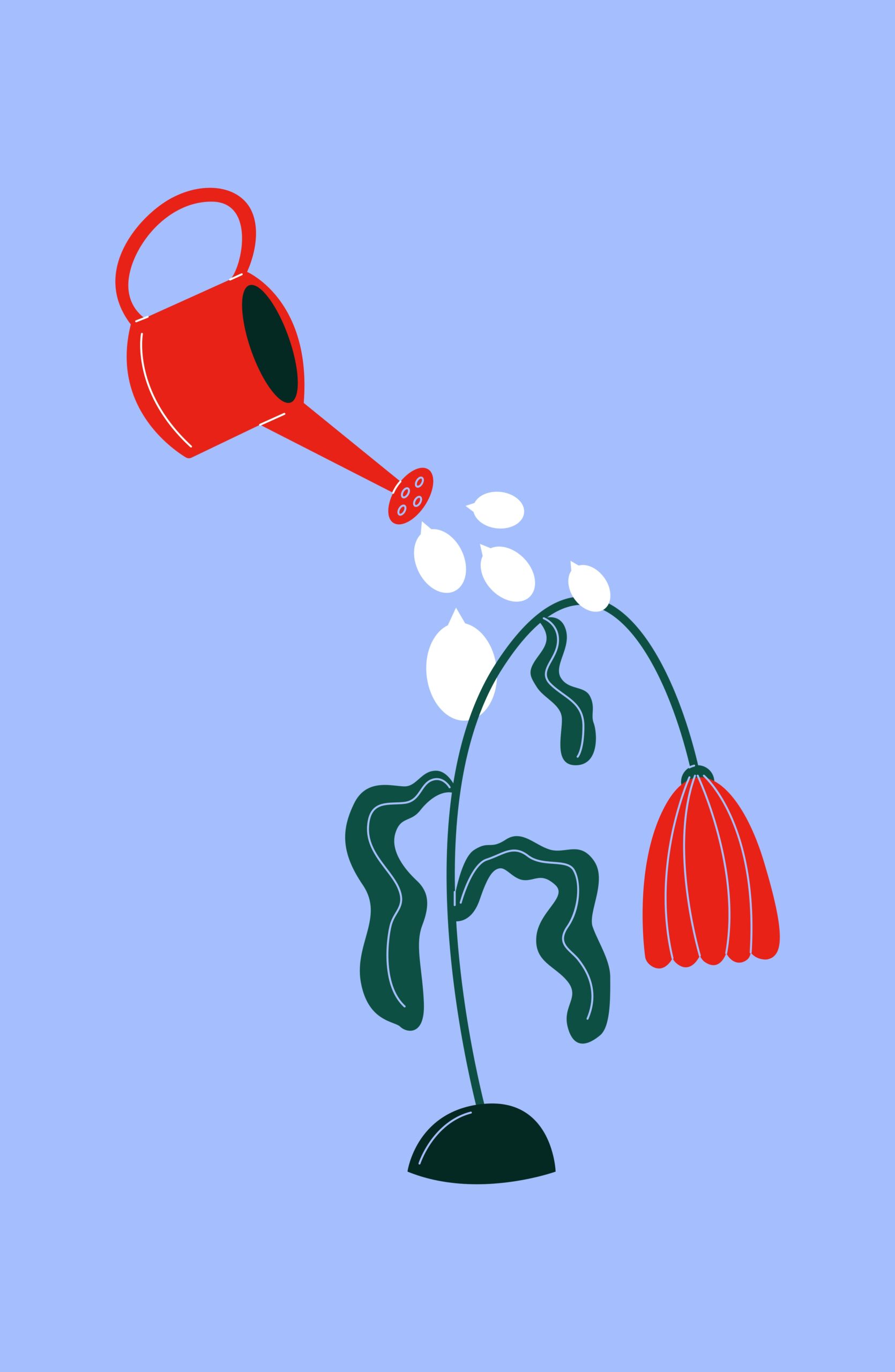
From the outside, this can look like procrastination or disengagement. From the inside, it often feels like a plant in need of sunlight and water, or trying to run important life software on a laptop that’s at 3% battery and refusing to charge.
Research shows that chronic stress affects:
-
emotional regulation
-
attention and working memory
-
interoceptive awareness (the ability to sense internal states)
-
a felt sense of agency and choice
Burnout isn’t just mental—it’s embodied.
What Actually Helps
Recovery from burnout doesn’t come from pushing harder or “fixing” yourself. It comes from rebuilding capacity and restoring regulation, one small step at a time.
Protect your bandwidth
Create gentle boundaries that signal safety to your nervous system: no-email windows, a real lunch break, or a consistent end to your workday. These choices may seem small, but they reintroduce predictability and control—two key ingredients for regulation.
Simplify the mental load
When burnout is present, the brain struggles with complexity. Choose the smallest possible next step. The goal isn’t productivity—it’s reducing overwhelm and restoring trust in your capacity to act.
This might look like 20 minutes of very slow walking, consciously tracking each footstep. Or repotting plants, slowly washing dishes by hand, or any simple activity done with full attention. Ordinary, low-stakes actions can help the nervous system settle and reorient.
Reconnect with what restores
Regulation often begins with simple, sensory-based inputs: a short walk, body scans, connecting with nature, gentle movement, visiting a sauna or steam room, or a few conscious breaths. These moments tell the body, “I’m safe enough to soften.”
My go-to involves improvisational movement inspired by the Chicago Symphony Orchestra’s Boléro 🔗—slow, repetitive, and gradually building. This kind of rhythmic, embodied engagement supports nervous system regulation, letting go, and a felt sense of safety, aligning with what Stephen Porges describes as cues of safety that allow the system to settle and reorganize.
Be met, not managed
Burnout heals faster when you’re not alone with it. Supportive spaces—whether relational, somatic, or reflective—help re-establish a sense of being seen and supported, which the nervous system requires for repair.
Surround yourself with people who care
Burnout softens more easily in connection. Make time to laugh with friends and family, to share a meal, a walk, or a moment of real presence. Being around people who care—who see you and let you be human—offers powerful cues of safety to the nervous system. Joining a meditation group or a shared practice space can also help restore rhythm, belonging, and perspective. We are not meant to recover alone.
A Closing Note
Burnout isn’t something to push through. It’s an invitation to listen more closely—to the body, to your limits, and to what’s been unmet for too long.
Restoration doesn’t come from force.
It comes from allowing the system to remember how to settle, move, and belong again.
If you need support, I’m here. Your first visit is free and takes just 15 minutes. Book a 15-Minute Initial Visit →
Research & References
-
McEwen, B. S. (2007). Physiology and neurobiology of stress and adaptation.
-
Schore, A. N. (2012). The Science of the Art of Psychotherapy.
-
Porges, S. W. (2011). The Polyvagal Theory.
-
van der Kolk, B. (2014). The Body Keeps the Score.
-
Farb, N. et al. (2015). Interoception, contemplative practice, and health.